
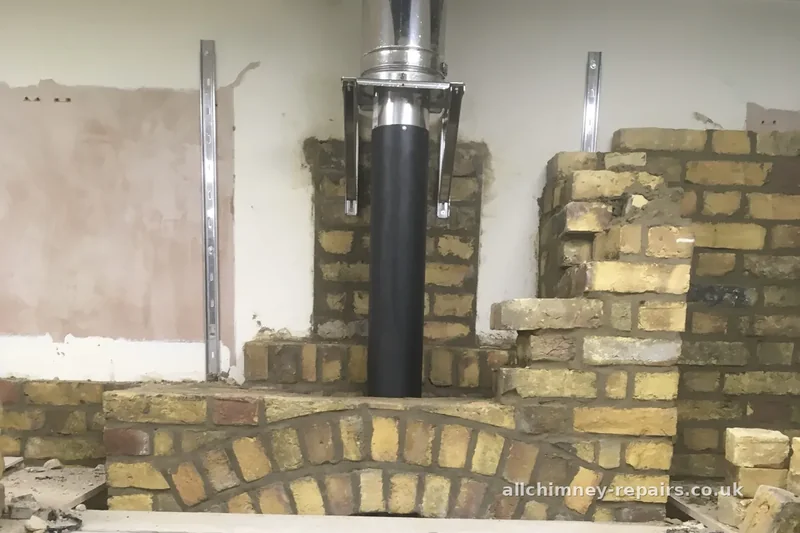
Chimney Lining Romford — HETAS Registered
125mm or 150mm Class 1 316-grade stainless steel flexible liner. All lining work HETAS certified. Building control notified on your behalf. Certificate issued on completion. HETAS company reg 6943.
Chimney Lining — Why It Matters
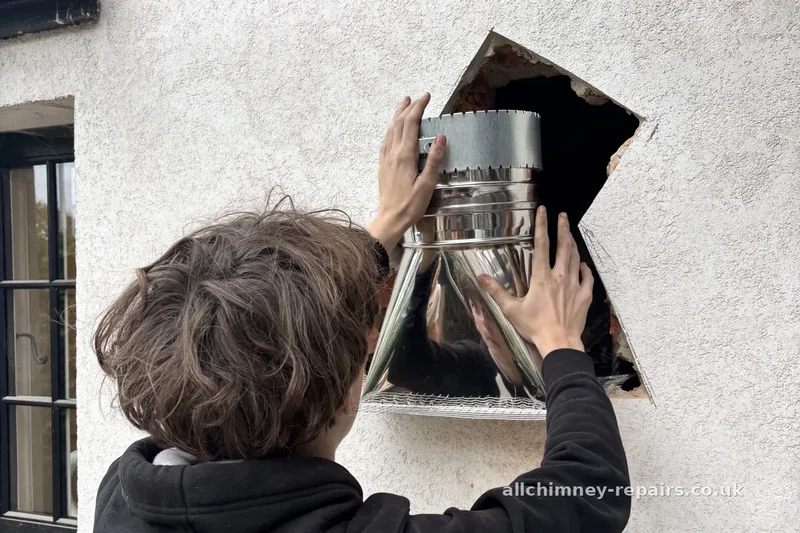
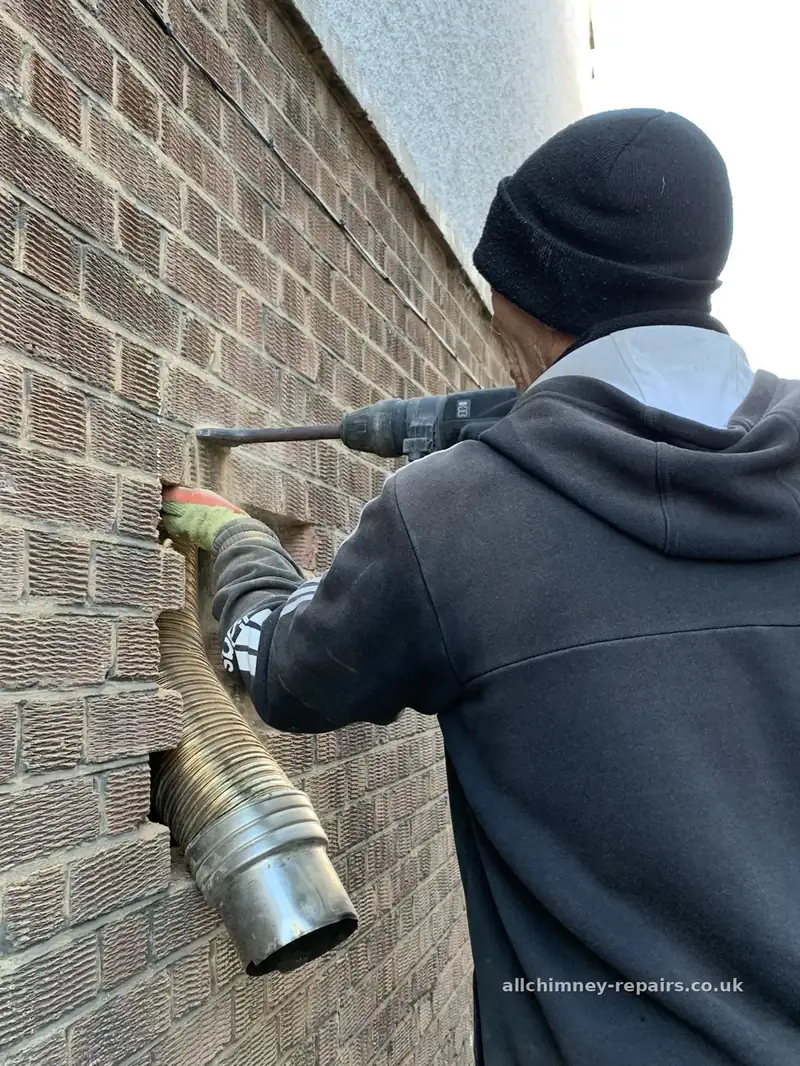
An unlined or deteriorated flue allows flue gases — including carbon monoxide — to pass through the brickwork and into the fabric of the building. It also allows moisture and condensates from combustion to penetrate the masonry, causing damp that appears well away from the chimney and is frequently misdiagnosed for months. One of the most common causes we find is damage during loft extension works — the liner is cracked or dislodged and the homeowner has no idea until performance drops. We have carried out liner replacements on properties where the living room was already fully decorated: on those jobs the opening comes from the external wall, all builder's work is done outside, and the brickwork and render are reinstated before we leave. The finished aperture is not visible to anyone who was not watching.
The liner diameter is determined by the appliance and fuel type. A 125mm multifuel flexible liner is standard for most solid fuel stove connections — the flex adaptor at the builder's opening bridges the liner to the stove pipe above the constructional hearth. For open fires the specification changes: 180mm minimum for gas open fires and GFE appliances, 200mm for solid fuel. The extra 25mm on the solid fuel diameter is a safety margin for soot build-up — if a chimney is not swept regularly, draw is not badly affected and smoke spillage is prevented. Both sizes are installed to a stainless steel gather hood which sits within the existing brick gather, sealed and backfilled to eliminate leakage into the cavity surrounding the flue. We inspect and clean the gather before the liner goes in — the condition of the gather at installation determines the long-term performance of the lining.
We install 316-grade Class 1 twin wall flexible liner as standard for solid fuel work. Class 2 gas flex — formerly sold as COPEX in the 1970s and 80s and still known by that name by many customers — is a thinner compound liner and not the correct specification for solid fuel appliances. Class 2 with solid fuel fails quickly. We also carry out full chimney reinstatements where the original chimney breast has been removed: new flue system installed internally through the floors to roof termination, brick fireplace built around on completion. It is the most complex job in this category and one that many contractors will not take on. HETAS certification is issued on every completed installation, building control notified on your behalf.
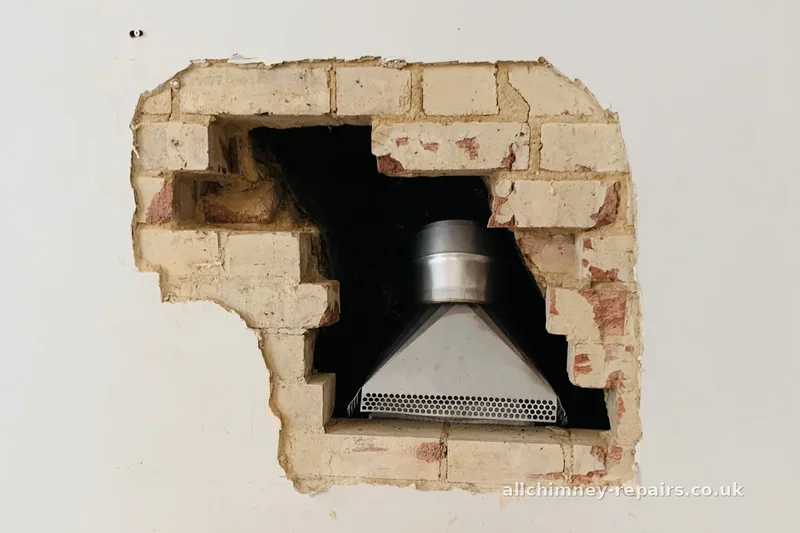
Gather hood fitted at brick gather above GFE gas open fire — 180mm minimum diameter lining installed to meet Building Regs Part J. HETAS cert issued on smoke testing and compliance checks, Romford.
What Every Lining Job Includes
316-Grade Liner
125mm or 150mm Class 1 twin wall flexible liner. Correct grade for solid fuel. Resists sulphurous condensates.
HETAS Certificate
Issued on completion of every job. Your insurer requires it. Your building control record includes it.
Building Control Notification
Notified on your behalf under Part J. You do not need to arrange this separately. It is part of every job.
Free Quote
Every lining job is priced individually. Call or WhatsApp for a free quote — photos help before a site visit.
Chimney Lining FAQ
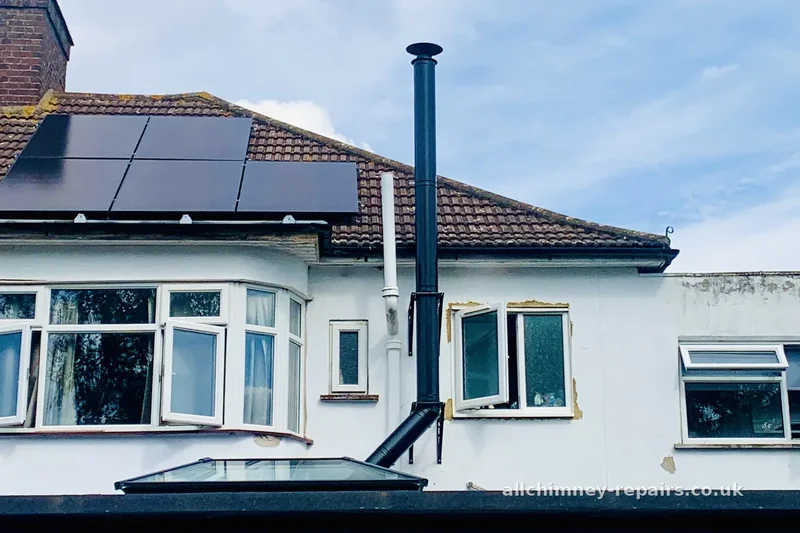
More Chimney Lining Jobs
Does chimney lining require HETAS certification?
Yes. Any chimney lining work connected to a solid fuel appliance is notifiable under Building Regulations Part J. Allchimney Repairs issues HETAS certification and notifies building control on your behalf on every lining job. Your insurer will require the HETAS certificate — it comes as standard on every liner we fit.
What size liner do I need?
For most domestic wood burning stoves and solid fuel appliances, a 125mm (5 inch) Class 1 flexible liner is the standard specification. Some appliances require 150mm. The stove manufacturer's specification and the flue draw will confirm the correct diameter. We advise before installation.
What grade of stainless steel liner do you use?
316-grade twin wall flexible liner as standard. This is the correct grade for solid fuel and wood burning use — it resists the sulphurous condensates produced by burning wood and coal. Lesser grades are not suitable for solid fuel.
What happens if my chimney is too crooked for a flexible liner?
Flexible liner will accommodate a reasonable degree of offset — typically up to around 45 degrees. More severe offsets, or flues with internal obstructions, may require investigation by dropping a mirror or camera. We advise on site after inspection.
Do you reline existing chimneys?
Yes. Replacement of an existing failed or corroded liner is a standard job. The old liner is removed and a new liner installed. If the existing liner was installed incorrectly — missing top plates, incorrect termination — these are rectified at the same time.
How much does chimney lining cost?
Every lining job is priced individually — flue diameter, liner type, and access all affect the cost. Every job is HETAS certified and building control notification is included as standard. Call or WhatsApp for a free quote.
Related Services
Covering Romford & Havering
Parts of Brentwood and Chadwell Heath also covered — call to discuss your location.