
Chimney Cowls & Cappings Romford
Rain caps, bird guards, anti-downdraught cowls and vented cappings. Supply and fit. Rope access service. Diagnose before recommending on downdraught problems.
The Right Cowl for the Right Problem
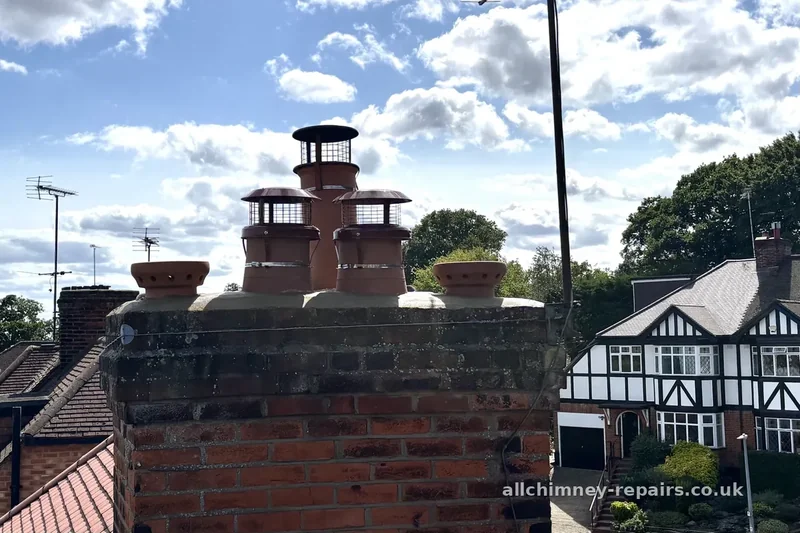
There are several different types of chimney terminal and each one solves a different problem. On a roofline job in Romford we fitted solid fuel bird guard cowls — high-top rain caps with mesh that stop both rain and birds entering the flue. The specification detail that matters: solid fuel cowls have larger mesh squares to allow soot to pass without blocking. Gas terminals have smaller squares. Fit a gas-specification terminal to an active solid fuel flue and the mesh chokes with soot within a season, restricting draw badly. Always the correct cowl for the fuel type. Fitting the wrong product is a waste of money and in some cases makes things worse than having nothing at the top.
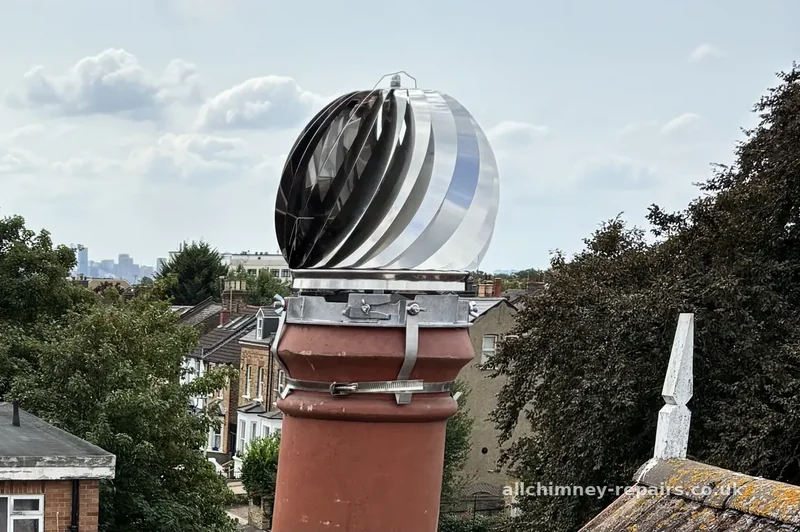
Downdraught — smoke pushing back into the fireplace rather than drawing up — is a specific problem that needs a specific solution. The spinning anti-downdraught cowl works on a straightforward mechanism: wind rotates the cowl head, the rotation generates upward draw in the flue, which overcomes the pressure differential causing the downdraught. It straps directly to the existing pot — no pot removal required on most jobs, which keeps cost and disruption down. We diagnose before recommending. Downdraught has more than one cause and a spinning cowl is not always the right answer — tall chimney termination, revised pot height, and flue condition all affect whether the problem is a product fix or a structural one.
For chimneys taken out of service, a vented capping is the right answer — it seals the top against weather and birds while maintaining airflow through the flue. Blocking a redundant chimney completely causes damp to build up in the stack and appear on the chimney breast inside. C-Cap plastic push-in vented caps fit directly onto a sound pot with no mortar or fixing required — a fast, clean installation where the pot is in good condition. One consequence of an uncapped flue that is easy to underestimate: birds. Once a bird enters a flue where the fireplace has been bricked up, it cannot get back out through the brick. Getting it out means opening the brickwork. A correctly fitted vented cap costs a fraction of that job.
On downdraught specifically — a spinning cowl solves the problem where wind direction at the terminal is the cause. It does not solve every downdraught problem. A chimney that has been reduced in height and now terminates below the high pressure zone created by nearby roof geometry needs a taller pot first; the spinning cowl may then help but it is not the primary fix. Extraction fans inside the property that depressurise the room and pull air back down the flue are a different cause again — a product at the top of the chimney does not fix a pressure differential inside the house. We establish the cause before recommending anything. On some jobs the answer is a cowl. On others it is not.
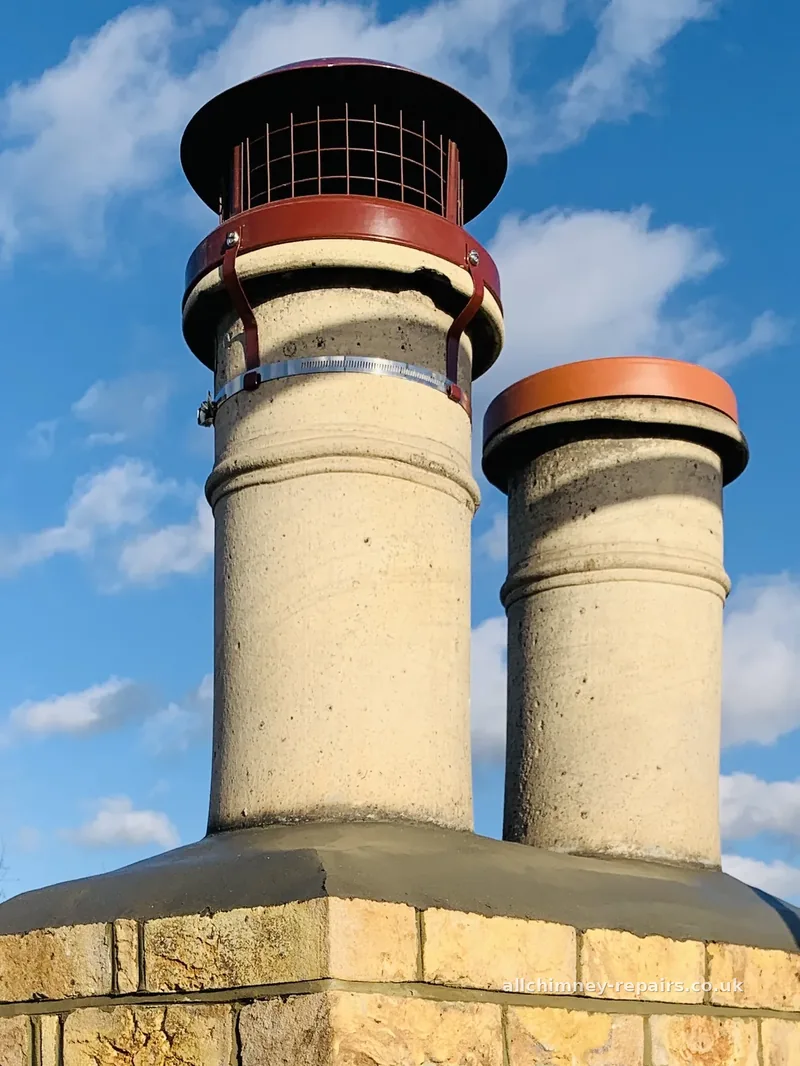
Buff pots fitted with solid fuel bird guard cowls and C-Cap push-in vented cap — new flaunching and top brickwork reinstated on completion. Chimney cowl fitting, Romford.
Cowls, Cappings & Guards
Rain Caps
Prevent rainwater entering unused or active flues. Supply and fit. Standard domestic stack. Free quote.
Bird Guards
Mesh cap prevents birds and debris entering the flue. Essential for unused chimneys. Combined with rain cap on most jobs.
Anti-Downdraught Cowls
Spinning or louvred cowls that convert wind into draw on the flue. Diagnose before recommending. Free quote.
Vented Cappings
For decommissioned chimneys. Seals against weather, maintains airflow. Prevents damp in unused stacks. Free quote.
Cowls & Cappings FAQ
More Cowl & Capping Installations
What causes chimney downdraught?
Downdraught occurs when air pressure differences push flue gases back down into the property rather than drawing them up and out. Common causes include nearby trees or buildings that are taller than the chimney stack and affect airflow, and extraction fans inside the property that depressurise the room and draw air back down the flue. An anti-downdraught spinning cowl is the most common fix — but we diagnose the cause before recommending a solution.
What is a vented capping?
A vented capping is fitted to a chimney stack that has been taken out of service — the fireplace has been blocked off or the appliance removed. The capping seals the top of the flue to prevent weather ingress and birds nesting, while the vented design maintains airflow through the flue to prevent damp building up in the stack. Blocking a chimney completely without ventilation is a common cause of persistent chimney breast damp.
Do I need a bird guard if my chimney is unused?
Yes. An unused chimney with an open top is an ideal nesting site for jackdaws in particular, who build substantial stick nests that block the flue entirely. A mesh bird guard prevents nesting while keeping the flue open to air movement. If you have had birds nesting in the chimney before, the nest should be removed before fitting.
How much does a chimney cowl cost?
Prices depend on cowl type, pot size and access. Rope access on most standard domestic stacks. Free quote — call or WhatsApp.
Can you diagnose downdraught before fitting a cowl?
Yes — and we always do. Fitting a cowl to a chimney with a downdraught problem without understanding the cause is a guess. We assess the property, flue height relative to the roofline and any nearby obstacles, and the extraction situation inside the property before recommending. On some properties the answer is an anti-downdraught cowl. On others it is a different solution entirely.
Related Services
Covering Romford & Havering
Parts of Brentwood and Chadwell Heath also covered — call to discuss your location.